
Date:
Capacity challenges continue for RoRo and project shipper
Roll-on/roll-off (RoRo) and project cargo shippers are entering a decisive phase, as fleet expansion, industrial investment and energy-driven demand are converging, creating both opportunity and pressure for shippers moving vehicles, machinery and oversized cargo.
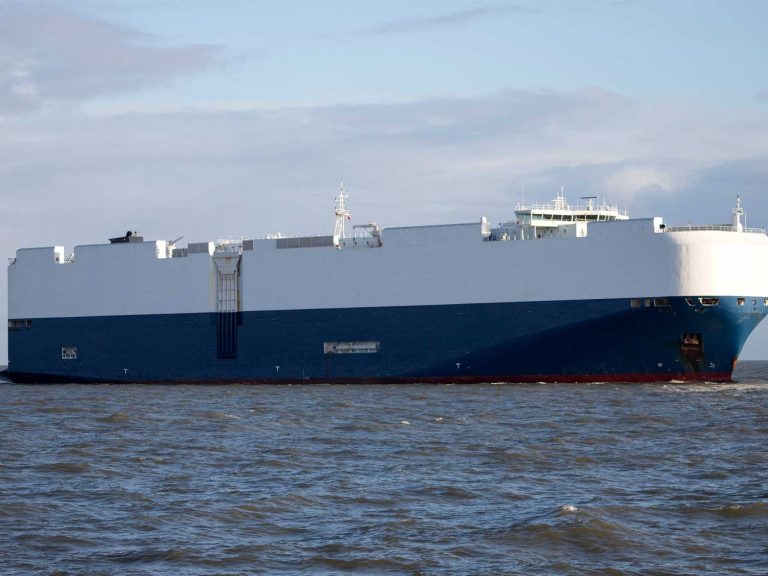
The global Pure Car Carrier (PCC) and Pure Car and Truck Carrier (PCTC) fleet is forecast to expand by around 40% over the coming years, with new vessels significantly larger than the ships they replace.
Latest-generation PCTCs are designed to carry 20–30% more car-equivalent units (CEUs) than legacy tonnage, lifting individual vessel capacity into the 9,000+ CEU range. Most new-builds are dual-fuel or alternative-fuel capable and ammonia-ready, reflecting a clear shift towards lower-emission operations.
Despite this expansion, RoRo capacity remains unevenly distributed. Vessel size growth primarily benefits vehicle flows, while availability for high and heavy cargo continues to depend on stowage flexibility, port infrastructure and trade imbalances.
High and heavy manufacturing: volumes steady, costs rising
Shipment trends from major global manufacturers of construction, agricultural and power-generation equipment provide a useful barometer for RoRo and breakbulk demand. While tariff-related costs are rising sharply, shipment volumes in key segments continue to grow.
Construction and forestry equipment shipments recorded year-on-year growth of more than 25% in the most recent quarter, driven by infrastructure spending and large-scale industrial projects. Power-generation equipment volumes also strengthened, with segment revenues rising by around one-third, reflecting accelerating demand from data centres and energy infrastructure.
Order backlogs across the sector have reached record levels, extending visibility well into 2026 and beyond. This supports steady outbound cargo flows, even as manufacturers maintain tight inventory control rather than front-loading production.
Project and breakbulk cargo enters a capacity-sensitive phase
Project and breakbulk shipping is being lifted by sustained growth in energy, metals and mining cargo. Global electricity demand linked to new power generation is forecast to grow at more than 3% per year through 2030, translating directly into increased movements of turbines, generators and transformers.
Fleet growth for heavy-lift capable vessels is projected at an average of just over 4% per year through the end of the decade. While sufficient for smaller and modular cargo, this pace risks falling short during peak periods for large, indivisible units.
Copper and other critical minerals are adding further pressure. Forecasts point to a potential 30% supply shortfall by the mid-2030s, driving investment in mining projects and associated movements of oversized equipment. These cargoes typically require specialised lift planning, crane operations and non-standard stowage.
As RoRo capacity grows by double-digit percentages and project cargo demand rises at a similar pace, the balance increasingly depends on planning, technical expertise and access to the right assets at the right time. 2026 is shaping up as a year where execution, sequencing and specialist capability determine success.
Metro’s dedicated automotive logistics and project shipping teams understand the operational, technical and scheduling complexities of RoRo, breakbulk and heavy-lift movements.
Working with leading global carriers, independent lines and charter operators, Metro helps customers secure reliable capacity, design resilient supply chains and optimise transport from factory gate through to dealer or point of use.
Email Andrew Smith, Managing Director, to discuss how Metro can safeguard your project cargo, vehicle flows and unlock efficiencies across your global logistics operations.